
How to Prepare for Your First Laundry Pickup on the Upper West Side
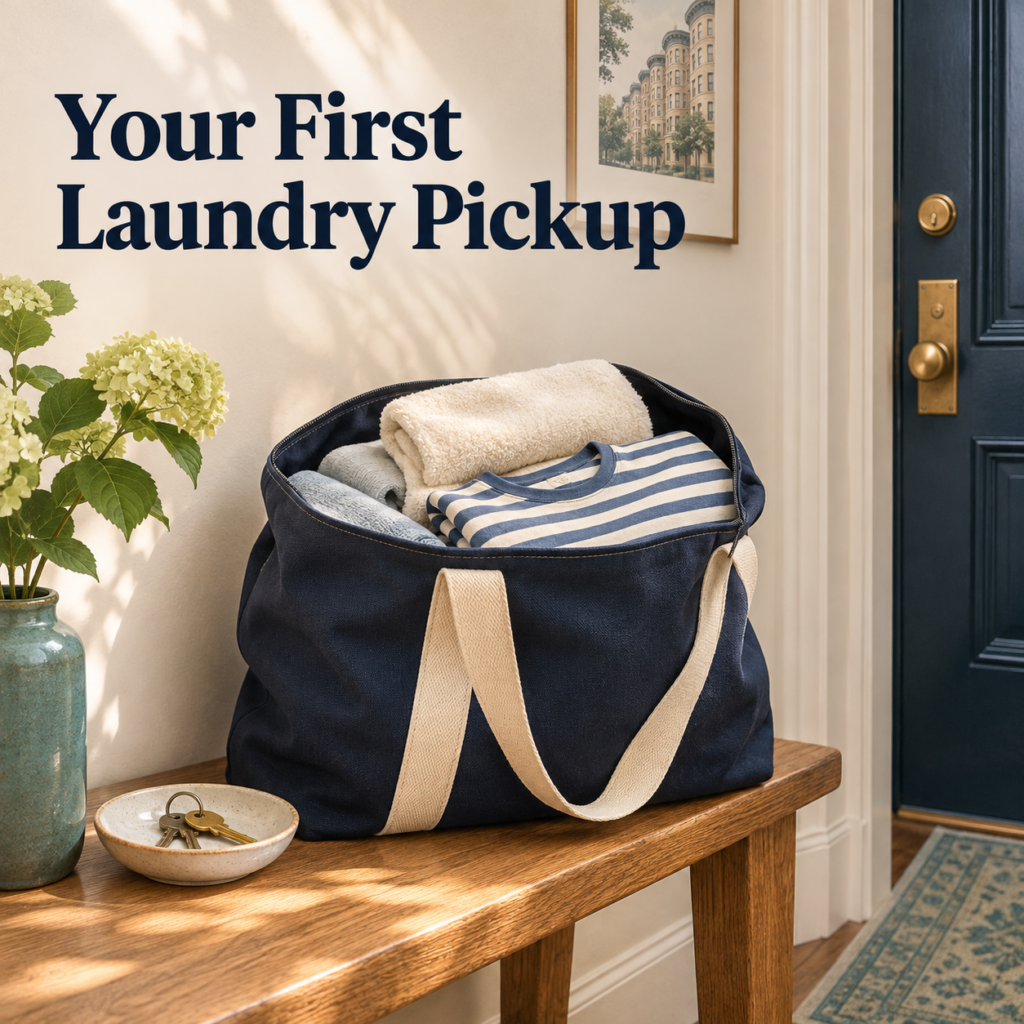
The easiest time to find a MetroCard, an earbud, or the key to your bike lock is while the laundry bag is still open. The second-best time is also while the bag is still open. Before you tie it shut, give yourself a few minutes to check the pockets, set aside anything that needs special care, and decide where the handoff will happen.
If this is your first laundry pickup on the Upper West Side, start with the clothes you reach for every week. A bag of T-shirts, socks, pajamas, and bath towels is a good way to get acquainted with the service. Here’s how we’d get that first bag ready, whether you live in a walk-up near Amsterdam Avenue or a building with a staffed lobby.
Start with the clothes you know best
Stand at the hamper and ask one question about each piece. Would you normally put it through a washer and dryer at home? For your regular cotton sheets, everyday underwear, and the sweatshirt you’ve washed a hundred times, the answer is probably yes. Those are sensible candidates for wash and fold. If you hesitate over a piece, set it on a chair and keep moving. You can work through the handful of exceptions once the main bag is packed.
Pay particular attention to clothes that look alike but get different care. Two black sweaters might share a drawer, yet one can go through the wash while the other needs dry cleaning. The label sewn into the side seam is more useful here than the color, price tag, or feel of the fabric. If the label calls for a method you can’t request when booking, leave the garment out and ask us about it.
You can also start small in terms of variety. A household that usually sends laundry out might be comfortable packing nearly everything at once. On a first order, there’s something to be said for sending the ordinary weekly wash and keeping the quilt your grandmother made at home until you’ve had a chance to discuss it. Our wash and fold guide explains how the washing, drying, and folding service works when you bring laundry into the store yourself.
What belongs in a separate bag?
A blazer draped over a hamper is easy to scoop up with the clothes underneath. So is the blouse you meant to ask about. Before you pack, make three piles on a bed or table. Use the first for everyday laundry, the second for pieces you want to discuss as dry cleaning, and the third for anything staying home. Once a garment lands in the third pile, put it away. That last step saves a surprising amount of confusion if someone else finishes packing.
If you’re sending dry cleaning along with the wash, keep it physically separate and identify the service clearly in your order. A note that says “one navy blazer for dry cleaning” is much easier to match to a garment than “some things in the bag need special attention.” Kinder Wash offers pickup for both services. Check the dry cleaning page if your order includes a suit, coat, or dress you’re unsure how to send.
Some pieces deserve a conversation before they leave your apartment. Examples include a dress with a detachable belt, a duvet with a removable insert, or a shirt with a damaged seam. Tell us which part you want cleaned and what you noticed. For bedding, specify whether you mean the cover, the insert, or both. That distinction gives us enough information to discuss handling, cost, and timing for the actual item in your hands.
Give the bag a five-minute pocket check
Start with the places where small things disappear. Turn out the front pockets of jeans, feel inside the little coin pocket, and open the zipper on workout shorts. Hoodies sometimes have a smaller pocket inside the front pouch. Check shirt pockets for pens and jacket sleeves for tissues. A good system for a shared household is to put everything you find in one bowl by the hamper, so nobody spends the next morning looking for their keys.
Next, unroll cuffs and shake out bedding. A fitted sheet can make a tidy hiding place for a dark sock or a child’s pajama top. Take personal items out of tote bags you plan to keep, and set aside belts, detachable accessories, or anything you don’t intend to have cleaned. A few seconds spent looking at the bottom of the hamper can also turn up the missing half of a pair before pickup.
Pack in a bag you can close securely and comfortably carry to the agreed handoff spot. If the trip downstairs takes two hands and a knee just to lift one enormous bag, split the load. Count the bags after you’ve finished. If you later tell the desk there are two bags and leave one beside the coat rack upstairs, the number on the order gives you a chance to catch it.
Write a laundry note someone can actually use
Useful laundry notes identify a particular item and a particular request. Imagine opening a bag with three blue shirts and reading “please look at the spot on the blue one.” Now imagine reading “blue-and-white striped button-down, coffee on the left cuff.” That second description tells the person looking at your order exactly where to start. If you know what caused the mark or what you’ve already tried, include that in a short sentence.
Preferences work the same way. If a garment needs a specific drying method, check whether we can accommodate it before including it. If a particular product matters to you, name the preference and ask what is available. A booking note gives you somewhere to record an agreed request. For an essential requirement, it’s worth having the conversation before the bag travels. Keep the care label attached so the garment and its directions stay together.
There’s no need to inventory every plain white sock. A quick list helps most with exceptions. You might write “two wash-and-fold bags, plus one separate garment bag with a gray suit jacket.” Keep a copy on your phone if someone else will hand over the order. You can then answer a question from the lobby or the store without trying to remember what went into the bag the night before.
Estimate the pickup price before booking
The first number to look for is the minimum. Kinder Wash lists a starting pickup and delivery minimum of $22.50 for up to 15 pounds of wash and fold, with additional weight at $1.50 per pound. Distance can affect the price for your address, and rush service may carry a fee. Dry-cleaning items have their own prices. Check Kinder Wash’s current pricing and review the terms for your address when you book.
Here’s what those figures look like in practice. At the listed starting rate, a 12-pound wash-and-fold bag comes to the $22.50 minimum. An 18-pound order has three pounds above the minimum, adding $4.50 for a base of $27. These examples assume ordinary wash and fold at the stated rate. If you also send a blazer, look up or ask for its separate dry-cleaning price before estimating the whole order.
Suppose you live close enough to pass our store on the way to work and have just eight pounds of laundry. The published drop-off minimum is $15 for up to 10 pounds. You could leave the bag at the store and pick it up yourself when it’s ready. On a week with guests, extra sheets, and two bags of towels, getting everything downstairs once and having it brought back may be worth more to you. The size of this week’s load and the trips you can realistically make are good guides.
Decide who will hand over the laundry
For a staffed building, ask the front desk how laundry pickups work there. Some buildings have a place for outgoing bags. Others ask residents to meet service providers in the lobby. Give the desk the name on the order and the number of bags, and make sure whoever is working during your window knows which ones are yours. Ask about returning clean laundry, too. Your evening concierge may follow a different shift routine from the person you spoke with at breakfast.
For a walk-up, picture the handoff from the sidewalk. Can a visitor identify the right entrance? Does the buzzer list a surname instead of an apartment number? If you plan to meet downstairs, a note like “please buzz 4B and I’ll bring the two bags to the lobby” gives the driver a simple next step. Share only the details needed for this order, through the booking channel. Check your building’s rules before leaving laundry in a common area.
If a roommate is helping, put one person in charge of the handoff and tell them what the bags look like. “The full navy drawstring bag by the door goes out. The cream tote is mine for work” is the kind of detail that matters at 8 a.m. When plans change, update the arrangement through the order portal or call the shop. A note taped inside your apartment door can’t reach a driver who’s already downstairs.
Work backward from when you need the clothes
Think about one item with a deadline. Maybe it’s the only set of sheets for tonight’s guests, your uniform for tomorrow’s shift, or the trousers you want to pack for an early train. Check the return timing offered for your order before you send that item. If the timing is tight, keep a spare at home or check with us first. Leave yourself enough time to receive the delivery and put the clothes where you’ll need them.
Our pickup page lists a 10 a.m. cutoff for same-day service and next-day delivery for orders placed after that cutoff. Use the portal to check the details for your address and order. Ask about a dry-cleaning piece separately if its return date matters for a particular event. A suit jacket and a bag of towels may be going out your door together, but you’ll want to know when each will be back.
A simple calendar trick is to enter both handoffs while booking. For example, if you’ll be home for pickup but at a school event during the return window, decide who can receive the clean bags now. If the arrangement becomes too complicated, bringing the order to our Amsterdam Avenue location may fit your week better. We’re at 409 Amsterdam Avenue on the Upper West Side.
The one-minute check at the door
Before the bags go downstairs, take one last look at what stayed behind. Have you kept tomorrow’s clothes, the belt you removed, and any garment you still have a question about? Look at the booking confirmation and compare it with the bags by the door. Check the apartment number, buzzer instructions, and contact details for whoever will be available. If your instructions mention the front desk, make sure the desk is expecting the handoff.
When the clean laundry comes back, open it while the order details are handy. Match any separately identified garments to your short list and put away the items you’ll need first. If you have a question, a description such as “the striped shirt from Monday’s two-bag pickup” gives us a place to start. Keep a note of anything you’d change next time. For many households, that’s as simple as choosing a return window when someone is usually home.
GOOD TO KNOW
A few questions.
Fresh answers.
The details that make laundry day a little simpler.
Do I need to weigh my laundry before booking?
A home weight estimate can help you budget. Check the pickup minimum and address-specific pricing when you book. If you have an unusually bulky item, ask how it is priced before including it.
Can I leave my laundry with the front desk?
Ask your building whether it accepts outgoing laundry and returning bags. If it does, include the agreed location in your pickup instructions and tell the desk the name and bag count on your order.
What if I only have a few items?
Compare the pickup minimum with in-store drop-off, especially if you pass the shop regularly. You can also hold everyday pieces until your next wash or use the self-service machines if you need a small load sooner.
Ready to send your first bag?
Choose your address and pickup window on our Manhattan pickup and delivery page. If you’re holding a garment you’re unsure about, call Kinder Wash at (917) 261-2770 before you close the bag. We’re happy to talk it through.